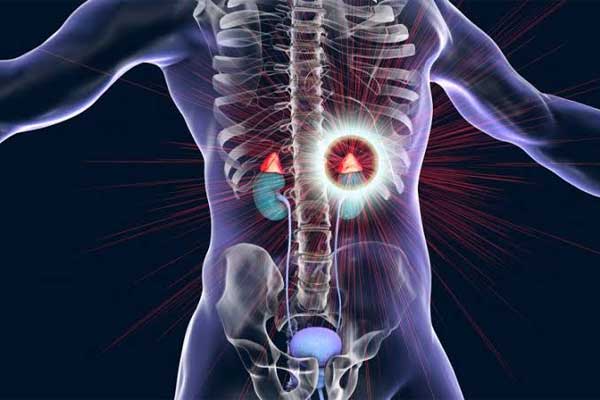
The adrenal glands, located on both at the top of kidneys, are responsible for the production of cortisol and many different hormones. It consists of shell (cortex) and core (medulla) parts. The cortex part consists of 3 different layers from the inside to the outside. Each part of the gland is responsible for the synthesis of a different hormone, layers from the outside to the inside:
- Zona Glomerulosa: Mineralocorticoid synthesis (Aldosterone)
- Zona Fasciculata: Glucocorticoid synthesis (Cortisol and its derivatives)
- Zona Reticularis: Androgen synthesis (Sex hormones)
- Medulla: Synthesis of stress hormones (Epinephrine, Norepinephrine, Dopamine)
Masses larger than 1 cm that are detected incidentally in the adrenal gland during radiological imaging performed for any reason are called “incidentaloma”. Its incidence increases with age; While it is less than 1% under the age of 30, it is more common than 7% over the age of 70. Recently, the frequency of detection has increased due to the increasing number of chest CT's due to the COVID-19 pandemic. When such a mass is detected, it should be evaluated in terms of hormone production and the possibility of malignancy.
Other than asymptomatic incidentaloma, diseases arising from the adrenal gland with clinical symptoms and signs are:
- Conn Syndrome: It progresses with an excess of aldosterone, there is drug resistant hypertension and low levels of potassium.
- Cushing's Syndrome: Elevated cortisol levels lead to severe clinical conditions such as hypertension and diabetes, susceptibility to infections and osteoporosis, as well as many physical signs.
- Pheochromocytoma: There is a clinical condition with resistant hypertension, headache and palpitation, which occurs with the release of excessive amounts of stress hormones.
- Adrenocortical Cancer: It is a very rare type of cancer. It might synthesize hormones, if it is hormonally active, there is more than one hormone overproduction. They are usually large masses with aggressive behaviour.
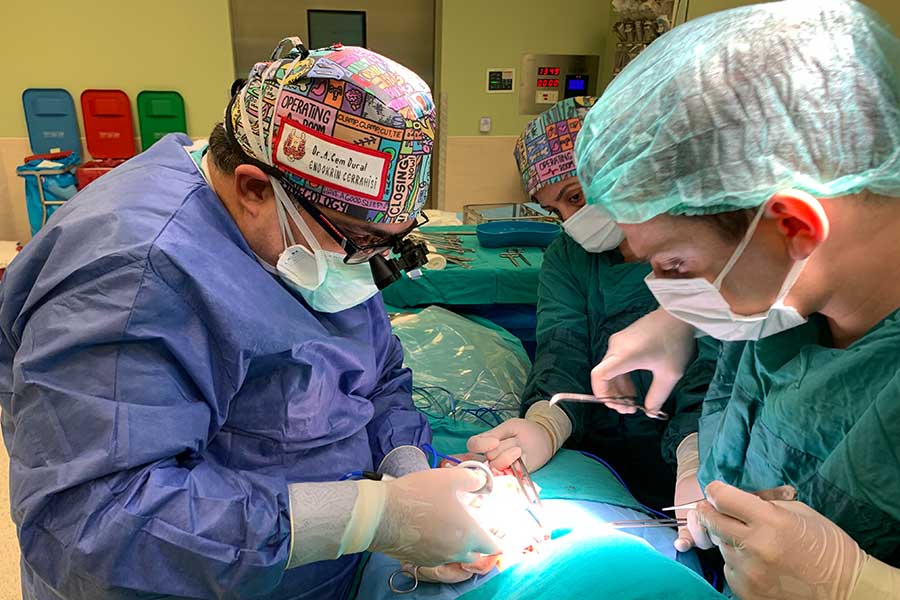
Treatment is surgery in masses that have been found to secrete active hormones. All patients with a mass size of 4-6 cm should be carefully evaluated. Since the probability of malignancy increases in masses larger than 6 cm, surgery should be offered as a first line treatment to patients. The gold standard in surgery is laparoscopy. Recently, robotic surgery has also been applied, and the results are as satisfying and safe as laparoscopic approach. Today, classical open surgery is preferred only in advanced cancer cases. Surgical planning for masses originating from the adrenal gland should be done in a multidisciplinary manner, and surgeries should be performed in tertiary referral centers.